How to Read Clothing Care Labels Before Laundry Day
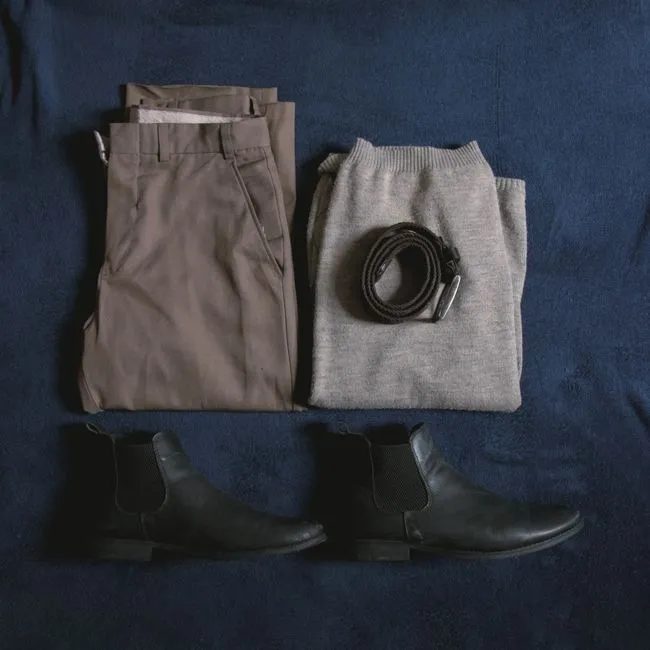
- How do you read a clothing care label?
- Start with the finished garment, not just the fabric name
- What do the main shapes tell you?
- Does a 30°C label tell you the whole wash setting?
- What do bleaching and drying instructions change?
- How can you turn three labels into a practical plan?
- What should a personal laundry note contain?
- When should you ask a professional cleaner?
- How does this help everyday outfit planning?
- Sources
How do you read a clothing care label?
Read the whole label before choosing a wash cycle: identify the cleaning method, temperature and handling limits, drying method, and any bleaching or ironing restrictions. Keep written warnings with the symbols rather than treating either as optional. Match those instructions to your appliance manual. If the label is missing, contradictory or unclear, ask the garment maker or a professional cleaner before experimenting.
Care instructions are part of making clothes usable, not a separate concern after styling. A piece that needs flat drying belongs in your weekly plan only when you have an appropriate place to dry it. That practical check complements a one-week outfit formula without requiring another purchase.
Start with the finished garment, not just the fabric name
Find every care instruction attached to the item and read both sides of accessible labels. Photograph the wording and symbols clearly if small print is difficult to read. Keep the original instructions available; a shortened personal note should supplement them, not replace them.
Fiber content does not establish care for the finished garment. U.S. Federal Trade Commission guidance says instructions must cover non-detachable linings and trim, while detachable components needing different care require separate instructions. FTC care-label guidance.
Our practical suggestion is to record the garment first: “navy cardigan with metal buttons,” not simply “knitwear.” That makes the note distinguishable from instructions for another item with a similar color or fiber blend.
What do the main shapes tell you?
Use this table as an orientation aid, then consult the complete explanation for the exact mark. A plain shape and the same shape crossed out are not interchangeable.
| Shape or feature | What to check |
|---|---|
| Wash tub | Whether and how the garment may be washed |
| Triangle | Bleaching permission or restriction |
| Square | Drying method |
| Circle inside a square | Tumble-drying instructions |
| Iron outline | Ironing permission and limits |
| Separate circle, sometimes with letters | Professional textile-care instructions |
GINETEX's current overview is explicitly based on ISO 3758:2023. Its wash-tub numbers are maximum temperatures in degrees Celsius; one bar below the tub means a milder process, and two bars mean a very mild process. The separate professional-care circle is different from the circle enclosed in the tumble-drying square. GINETEX symbol reference.
Do not assume every chart found online uses an identical system or edition. FTC guidance distinguishes U.S. ASTM symbols from ISO symbols. If a label and a chart do not match, clarify which instructions apply to that garment rather than selecting whichever interpretation seems easiest.
Does a 30°C label tell you the whole wash setting?
No. Temperature is only one part of the instruction. A number does not cancel a bar beneath the tub, a hand-washing direction, or wording such as “wash separately.” Read those together.
For example, a hypothetical label showing 30°C with two bars calls for both its temperature limit and its very mild process. Copying only “30” into your laundry note loses an important condition. A different garment with the same number may have different handling instructions.
Next, find the corresponding information in your washer's manual. Whirlpool notes that cycle names and settings vary by make and model and directs readers to their user-care guide. A familiar button name on a different machine is not enough evidence that its settings match your previous machine. Whirlpool's cycle-selection guidance.
Write down the model-specific choice only after checking it. If you use a shared laundry, keep the garment instruction separate from the machine setting: one remains attached to the clothing, while the other may change when you use a different appliance.
What do bleaching and drying instructions change?
Whirlpool's symbol guide identifies an empty triangle as allowing bleach, a crossed triangle as prohibiting it, and two diagonal lines inside a triangle as permitting non-chlorine bleach. Permission is not a requirement to add a product. Read the garment instructions alongside the laundry product's label and the appliance instructions. This guide provides no chemical mixtures or stain-removal recipes. Whirlpool's care-symbol guide.
Read the drying instruction before starting the wash. Drying flat means placing the item flat on a clean surface; tumble drying uses the dryer. They are different methods, not two names for a low-temperature setting.
Under the FTC guidance, a label directing flat drying does not also have to warn against tumble drying. The absence of a second prohibition is therefore not permission to substitute the dryer. Keep the specified drying method in your plan, including any additional wording on the garment.
For a shared household, make the drying handoff explicit. A note saying “cardigan: flat dry; keep out of dryer” is easier to act on than “special laundry.” Leave instructions where the person transferring the load can see them, without blocking controls or interfering with appliance operation.
How can you turn three labels into a practical plan?
The following garments and instructions are fictional teaching examples, not product specifications or items we tested. The table shows selected instructions; in real use, record and follow the complete label.
| Example garment | Selected label instructions | Planning decision |
|---|---|---|
| Blue shirt | Machine wash 30°C, mild process; wash with like colors; line dry | Check a compatible wash group and reserve line-drying space |
| Cream cardigan | Hand wash; dry flat; do not bleach | Keep out of the machine-wash group and prepare suitable flat-drying space |
| Dark trousers | Machine wash 30°C; wash separately; tumble dry low | Keep separate despite sharing the shirt's temperature number |
There are three items and three different care plans. That does not automatically mean three machine loads: the cardigan's example calls for hand washing. Nor can the shirt and trousers automatically share a load, because the trousers' separate-washing direction takes priority over the matching temperature.
The useful observation is not that a mixed wardrobe is inconvenient. It is that the care requirements were different before any water or product was added. You can now decide which items to prepare today and which to schedule later.
For the shirt, check its proposed companions rather than assuming everything blue is compatible. Whirlpool's laundry instructions recommend sorting by color and fabric type or the garment's care directions. Whirlpool's sorting guidance. Matching one characteristic is not a substitute for checking the remaining instructions.
What should a personal laundry note contain?
Use a short record for unfamiliar pieces or clothes handled by more than one person. Our suggested fields are:
- Item: a description precise enough to identify the garment.
- Original instructions: a clear photograph or exact transcription.
- Cleaning method: machine, hand, or professional care as directed.
- Limits and warnings: temperature, handling, separation and product restrictions.
- Drying and finishing: the complete directions, not just the wash setting.
- Unresolved question: anything to confirm with the maker or cleaner.
Do not fill an unknown field with a guess. “Ask maker about faded drying symbol” is a complete next action; an invented instruction is not.
Before washing, compare the note with the garment again. This is especially useful if several similar pieces have different care requirements. Afterward, record only what actually happened, such as the method used or a problem noticed. One uneventful wash outside the instructions does not establish that the alternative is suitable.
When should you ask a professional cleaner?
Ask for help when the label is illegible, the instructions conflict, or you cannot identify the correct procedure. Bring the entire garment and every available label, rather than sending only its fiber percentage. Explain any alteration, existing damage or previous treatment you know about without guessing its history.
GINETEX describes professional-care letters as information for textile cleaners. Its professional wet-cleaning process is not equivalent to using a household washing machine. Do not use the circle's letters as a shopping list for solvents or convert professional-care permission into home-washing permission.
Keep ironing questions within the same boundary. Follow the garment's actual ironing and steam restrictions and the iron's instructions; do not select heat from the fiber name alone. If the marking is unclear, obtain clarification rather than trying successively hotter settings.
How does this help everyday outfit planning?
Add a care check to the clothes you already reach for. Ask whether the cleaning method, drying space and turnaround fit your real week. That is a practical selection criterion, not a judgment about the garment or the wearer.
Keep an alternative outfit available when a required piece cannot be cleaned and dried as directed in time. If someone else manages your laundry, agree on a readable handoff that suits their access needs too. More everyday style guidance can help organize the clothes themselves; the care label tells you which maintenance plan those choices require.